
🎯 Recommended Products for Students & Parents
Handpicked products specially selected for our visitors.

School Backpack Combo
✔ 29 L Spacious Backpack
✔ Includes Tiffin & Pouch
✔ Perfect for School & Coaching

Niacinamide Bright & Clear Skin Combo
✔ Brightens Skin
✔ Reduces Acne Marks
✔ Suitable for Daily Skincare
Disclosure: Some links on this page are affiliate links. We may earn a small commission if you purchase through them, at no additional cost to you.
Have you ever accidentally swallowed seawater while swimming? It tastes incredibly salty. But if you’ve ever sipped water from a clean mountain stream or swum in a river, you’ve probably noticed it doesn’t have that strong salty taste.
Why is the ocean salty but rivers are fresh? The answer lies in a natural process that has been shaping our planet for billions of years. Rivers continuously carry tiny amounts of dissolved minerals from rocks into the oceans. As ocean water evaporates, the water leaves behind the dissolved salts, causing them to accumulate over time. Rivers, however, are constantly replenished with fresh rainwater, so salt never builds up to the same level.
Let’s explore how this fascinating process works.
Table of Contents
Why Is the Ocean Salty but Rivers Are Fresh? (Quick Answer)
The ocean is salty because rivers carry dissolved minerals from rocks into the sea. Over millions of years, these minerals have accumulated because water evaporates from the ocean, but the dissolved salts remain behind.
Rivers stay fresh because they are constantly flowing. Fresh rainwater and melting snow continuously replace river water, preventing salt from building up.
Where Does the Ocean’s Salt Come From?
Believe it or not, most of the ocean’s salt begins its journey on land.
When rain falls, it absorbs a tiny amount of carbon dioxide from the atmosphere, making it slightly acidic. This weak acid slowly breaks down rocks in a process called weathering.
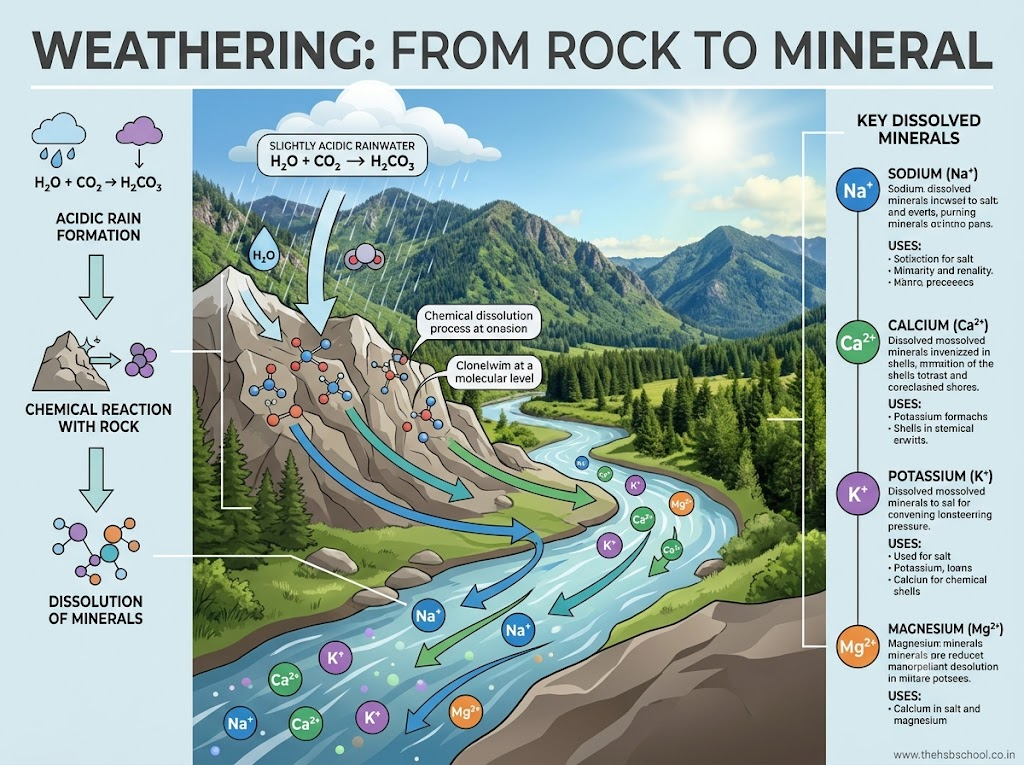
As rainwater flows across mountains, forests, and valleys, it dissolves small amounts of minerals, including:
- Sodium
- Calcium
- Potassium
- Magnesium
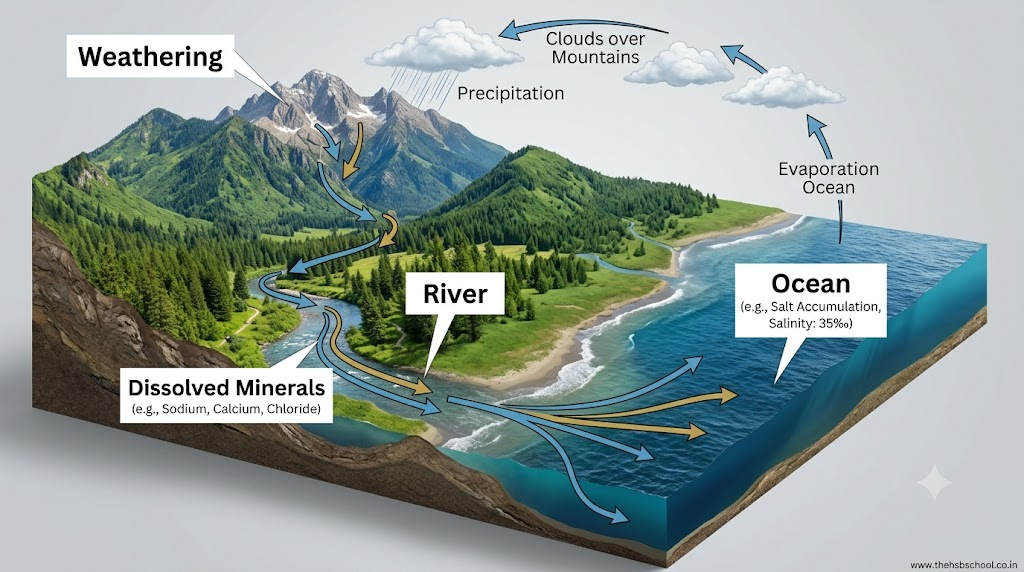
These dissolved minerals are carried by rivers and streams toward the oceans.
Although each river contains only a tiny amount of dissolved minerals, together they transport billions of tons of minerals into the oceans over geological time.
Why Does the Ocean Stay Salty?
The answer lies in the water cycle.
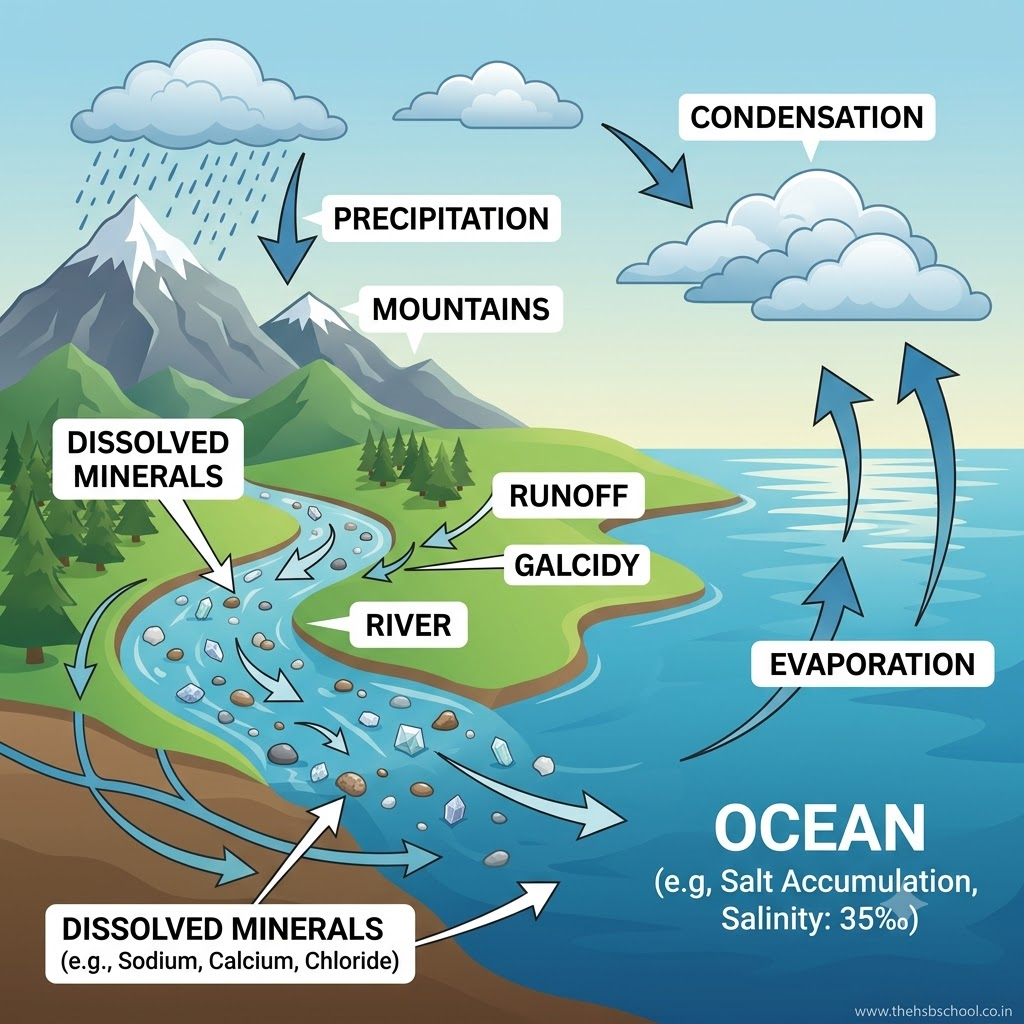
The Sun heats the surface of the ocean, causing water to evaporate into the atmosphere. During evaporation, only water molecules rise into the air. The dissolved salts remain in the ocean because they do not evaporate under normal conditions.
The evaporated water forms clouds, falls back to Earth as rain or snow, and eventually flows through rivers back into the sea.
Every trip through this cycle brings a little more dissolved mineral into the oceans while leaving the existing salt behind. Over millions of years, this has made Earth’s oceans salty.
Think of it like making soup. If you simmer a pot of soup for hours, water gradually evaporates, but the salt stays behind. As more water evaporates, the soup becomes saltier.
Why Aren’t Rivers Salty?
This is one of the most common questions people ask.
Although rivers carry dissolved minerals, they never hold onto them for very long. Rivers are constantly moving, carrying water downhill toward lakes and oceans.
Fresh rainfall, underground springs, and melting snow continually add new freshwater to rivers, diluting the minerals they contain.
As a result, rivers do contain small amounts of dissolved salts, but the concentration is usually too low for us to taste.
How Salty Is Ocean Water?
On average, seawater has a salinity of about 35 parts per thousand (35‰). That means one liter of seawater contains approximately 35 grams of dissolved salts.
Around 85% of these dissolved salts are made up of sodium and chloride ions, which combine to form sodium chloride—the same compound found in table salt.
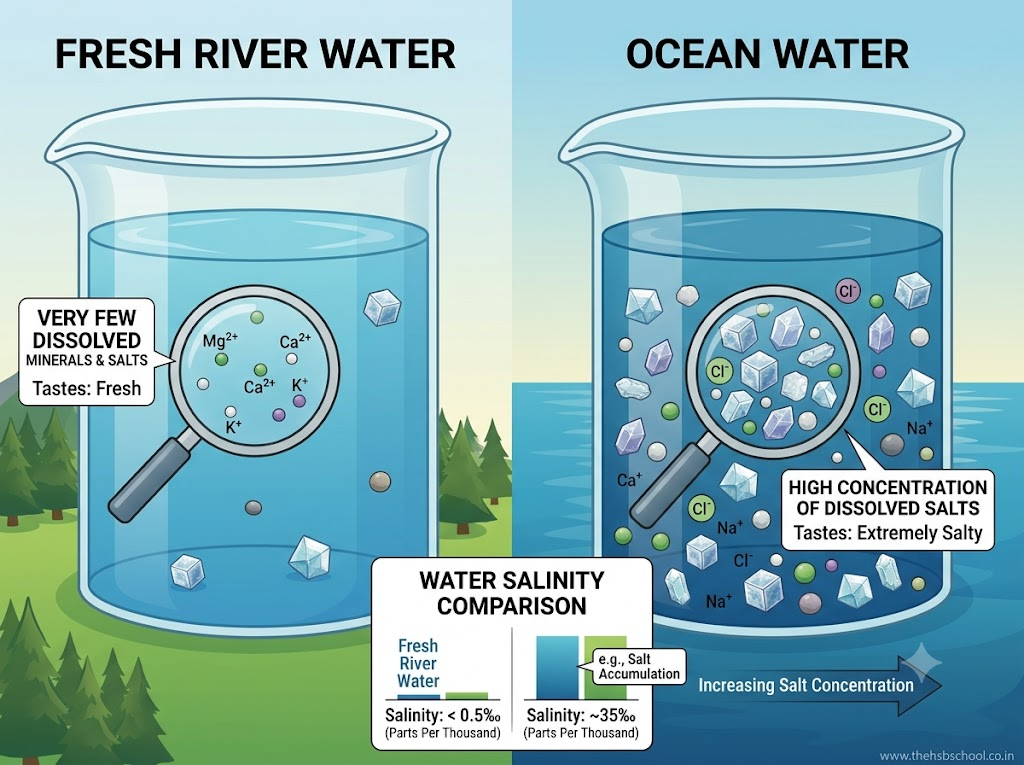
The remaining salts include magnesium, sulfate, calcium, and potassium.
Are All Oceans Equally Salty?
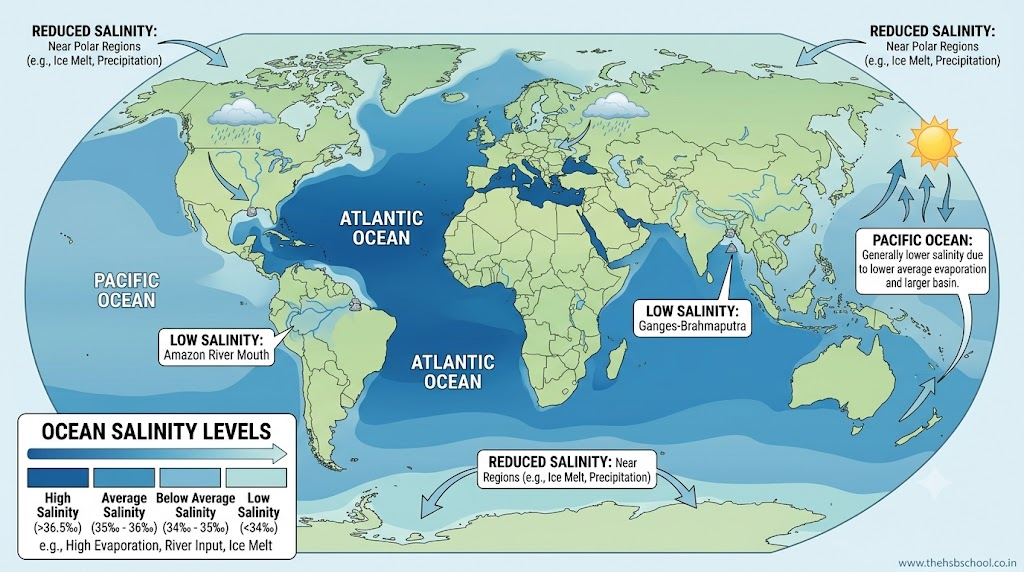
No. Ocean salinity varies depending on location and climate.
Hot and Dry Regions
Areas with high temperatures experience more evaporation. Since water evaporates but salt remains behind, these regions become saltier.
Rainy Regions
Heavy rainfall adds fresh water to the ocean, reducing salinity.
Near Large Rivers
Where massive rivers such as the Amazon empty into the ocean, seawater becomes less salty because of the large amount of incoming freshwater.
Polar Regions
Melting sea ice and glaciers release fresh water, lowering salinity in nearby oceans.
Which Ocean Is the Saltiest?
Among the world’s major oceans, the Atlantic Ocean is generally saltier than the Pacific Ocean because it experiences higher evaporation and different patterns of rainfall and ocean circulation.
Some inland bodies of water are even saltier. For example, the Dead Sea contains nearly ten times more salt than the average ocean, making it easy for people to float.

Can the Ocean Ever Lose Its Salt?
Not entirely.
The ocean slowly removes certain minerals through natural processes.
For example:
- Shellfish, corals, and other marine organisms use calcium to build shells and skeletons.
- Some minerals settle onto the ocean floor and become part of new rocks.
- Chemical reactions also remove small amounts of dissolved minerals from seawater.
However, rivers continue delivering new minerals, helping maintain the ocean’s overall salinity.
Fun Facts About Ocean Salt
- Earth’s oceans contain enough dissolved salt to cover all land with a layer hundreds of feet thick.
- Every river carries dissolved minerals, even though the water tastes fresh.
- Scientists measure the saltiness of water using a value called salinity.
- Seawater contains dozens of dissolved elements, not just sodium chloride.
Frequently Asked Questions
Why don’t rivers become salty?
Rivers constantly receive fresh rainwater and flowing water carries dissolved minerals into the ocean before they can accumulate.
Can humans drink ocean water?
No. Ocean water contains far more salt than the human body can safely process. Drinking seawater actually increases dehydration because your kidneys need extra water to remove the excess salt.
Is rainwater salty?
No. During evaporation, only water molecules enter the atmosphere. Dissolved salts remain behind in oceans and lakes, so rainwater is naturally fresh.
Which ocean is the saltiest?
The Atlantic Ocean is generally the saltiest of the five major oceans.
Conclusion
So, why is the ocean salty but rivers are fresh? It all comes down to Earth’s natural water cycle. Rivers slowly dissolve minerals from rocks and carry them into the oceans. As seawater evaporates, the water returns to the atmosphere, but the dissolved salts stay behind. Over millions of years, this process has made the oceans salty while rivers remain fresh.
It’s a remarkable example of how Earth’s natural systems work together, creating the balance that supports life on our planet.
Enjoyed this topic?
If you’re curious to learn more about science, don’t miss our other exciting blogs:
- What is Gravity?
- What is Electricity?
- What Causes Earthquakes?
- Why is the Sky Blue?
- How Do Plants Grow?
…and many more fascinating science topics!
Explore more science blogs here and keep your curiosity alive!